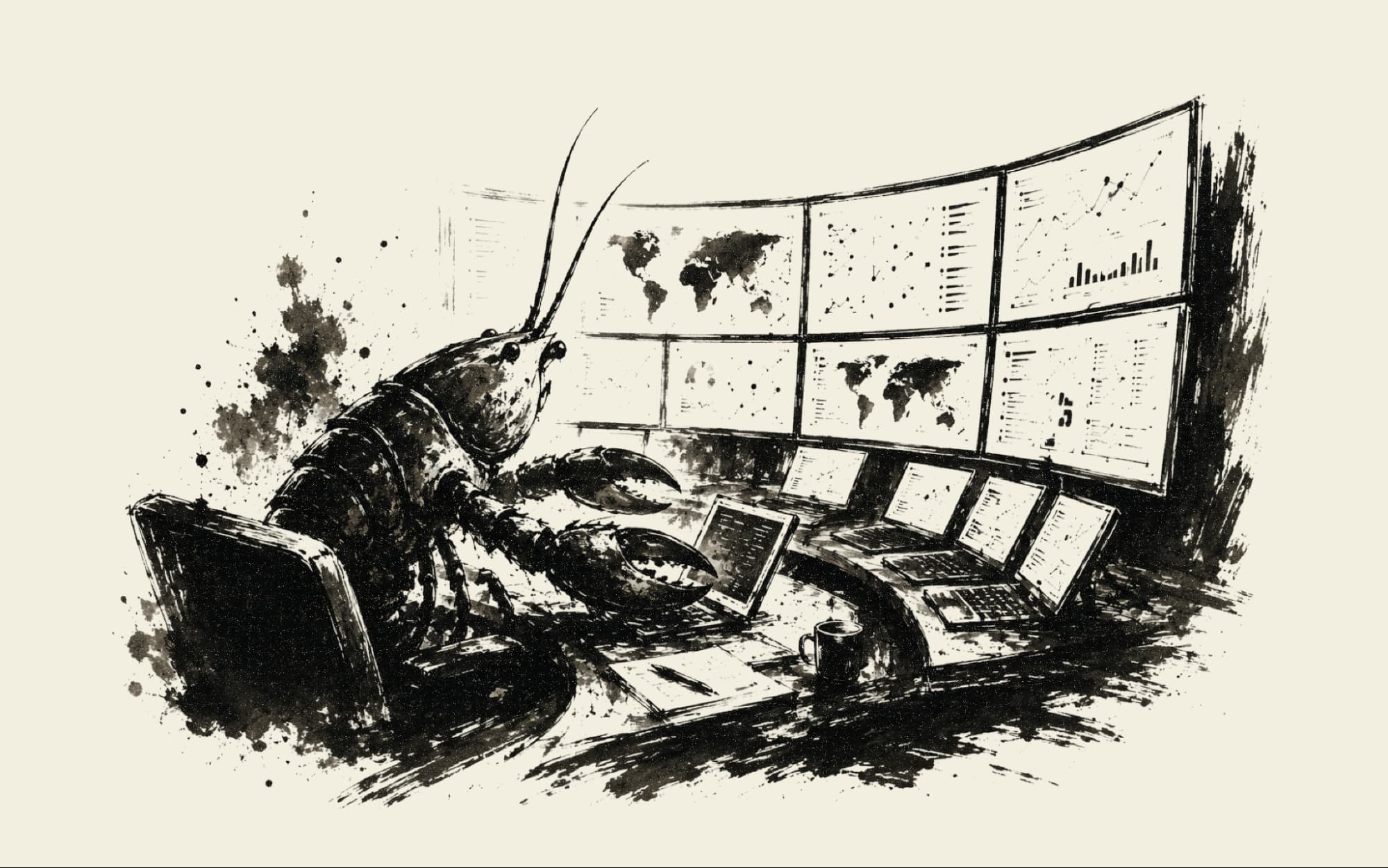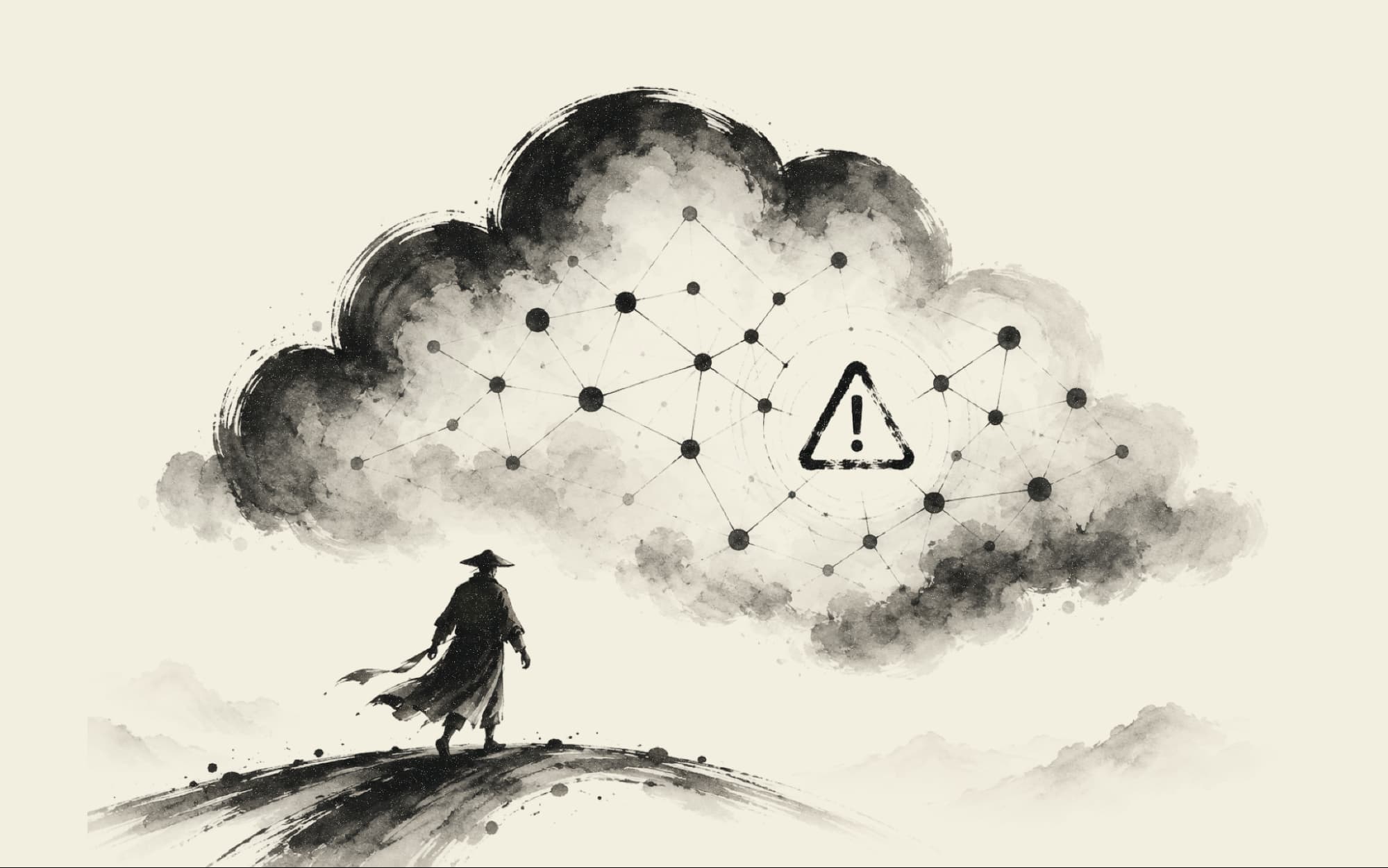


The SOC was not designed for machine speed.
AI-operated attacks iterate in seconds. Attacker execution outpaces containment speed. Data is sprawling across SIEMs, data lakes, and multiple point solutions. Organizations pay to move data, ingest data, store data, and query data. The SIEM bill is growing. The detection library grows because vendors ship more rules. Analyst headcount grows because the alert queue grows. AI-operated attacks move through activity that looks completely legitimate. Rules built for known patterns miss what looks normal. Detection alone is no longer enough.
The SOC architecture we've been running on was designed for a different era.
A New SOC Architecture Is Forming
AI SOC agents can now investigate alerts, run federated queries across data sources, build detections, and remove analyst bandwidth constraints. Forward thinking organizations are starting to rearchitect their SOC. They are decoupling compute from storage, migrating data out of the SIEM into open data lakes, and allowing AI to operate on top of them.
These are the right moves. But we're missing a layer.
Detection and investigations are still operating in silos: different teams, different tools, different reasoning planes. In order to complete the transition into the new SOC infrastructure, built on top of the new data lake, we need to converge the detection and investigation layers into a shared reasoning plane.
At Mate, we've been building that layer from day one.
Introducing Continuous Detection / Continuous Response
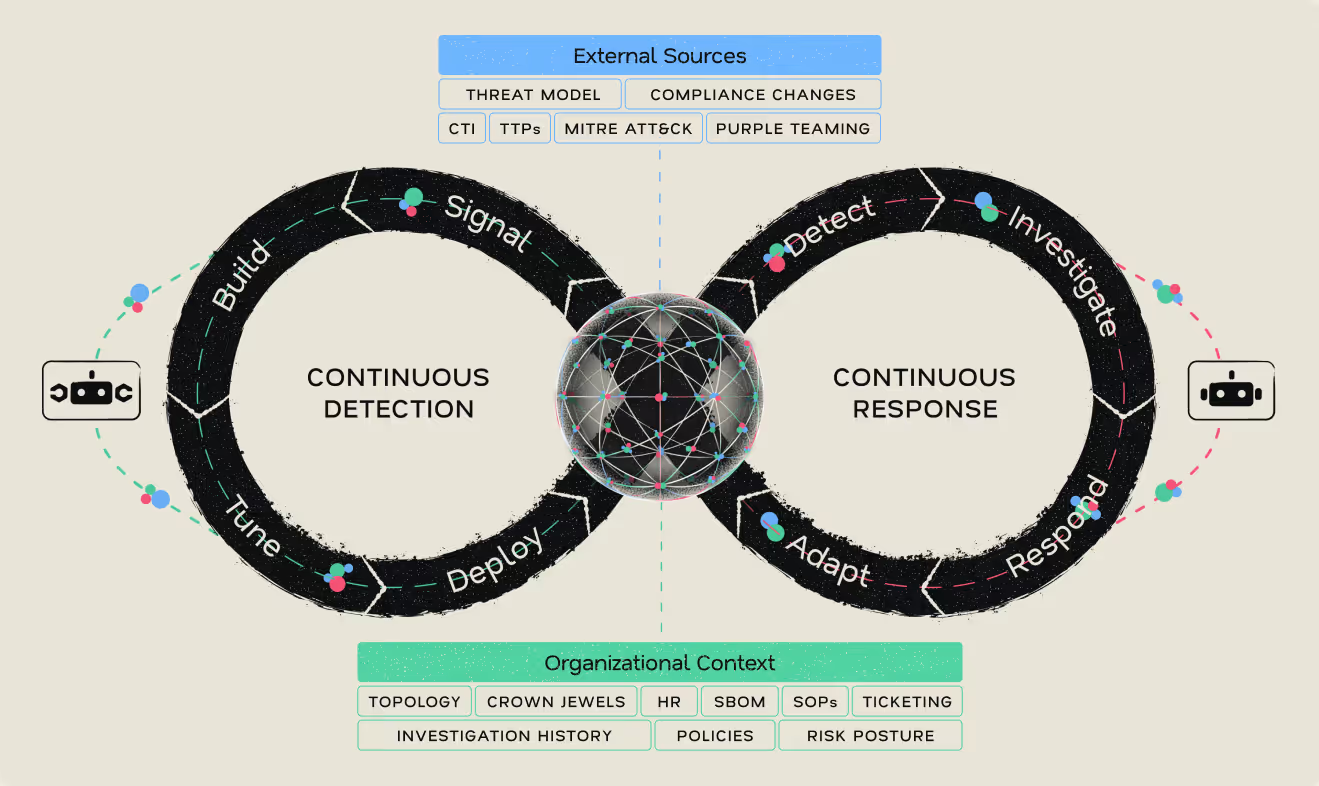
Today we are introducing an architectural framework we call CD/CR: Continuous Detection, Continuous Response.
Think about it: Detections and investigations are mirror images: a detection is an investigation that's been run often enough to automate. An investigation is a detection that hasn't been compressed yet.
CD/CR is a framework where detection, investigation and response run as one continuous loop on a single reasoning plane. Investigations compress into new detections. Detections feed the next investigation. The wrong ones are tuned out. New ones are automatically built. Confirmed noise closes automatically. Containment executes continuously - at scale: scoped, immediate, contextual. The SOC compounds with every alert.
Mate Has Been Building That Plane Since Day One
What makes CD/CR possible is the connective tissue that allows detection and response to reason on top of the same context.
Before we built our first agent, we spent months building the Security Context Graph: a living model of organizational knowledge, aggregating distributed sources: data lakes, telemetry, SOPs, architecture, Slack messages, querying data where it lives, adding external sources like threat intelligence and MITRE ATT&CK.
Most importantly, we built it from the investigation side first.
Investigations Are the Best Source of Truth in the SOC. Now They Build Detections.
Mate's knowledge starts where ground truth is created: AI investigations - the reality.
An investigation sees what happened now, in your environment, with your assets, against your specific threat model. That is the most valuable and timely signal for security in the organization, and that's why we started building there.
This reality builds adaptive, context-driven detections, aligned with our customers' reality and powered by the ability to reason across fragmented data sources.
Vendor rule libraries guess at your environment. Investigations know it.
Every case your team closes is a compression candidate: a detection waiting to be written, shaped by your specific assets, your specific threat model, your investigation history, even back and forth Slack messages. A generic rule doesn't know that your DevOps team runs tooling on a non-standard port, or that your CFO triggers after-hours login alerts every earnings season. Your investigations do.
CD/CR is the framework that makes that compression automatic. When context evolves, detections get more precise with every cycle.
The Result: A Self-Improving SOC Operating at Machine Speed
CD/CR is the enabler of the new Security Operations architecture that we need in the AI era.
Detections and investigations now reason on the same plane.
Organizations implementing CD/CR see the impact, their SOCs are:
- Faster: Detections are created continuously, tested by agents, and rolled out when approved. No manual release cycle, no tuning backlog. Investigations query at the source. Containment is nearly instant, and executes at scale.
- Precise: Every exception is time-bound and auto-reversing. Coverage stays intact as context changes. Investigation and response is fully aligned with your context, prioritized by blast radius, built directly into your architecture, not bolted on.
- Cost Effective: SIEM bills drop. Mate identifies exactly which data earns its keep so you stop paying to ingest what you don't need.
- Compounding: Every closed investigation is a compression candidate. Coverage grows as a byproduct of investigation work, not a separate engineering backlog.
- Resilient and Adaptive: As organizational context changes, detections update automatically. The flow no longer breaks with change.
- Focused: Noisy detections are filtered before they reach the queue. Analysts spend minutes on a case, not hours.
This is a SOC that is efficient, precise, cost effective, and resilient. One that gets sharper every cycle, automatically. Now we’re ready to operate at machine scale.