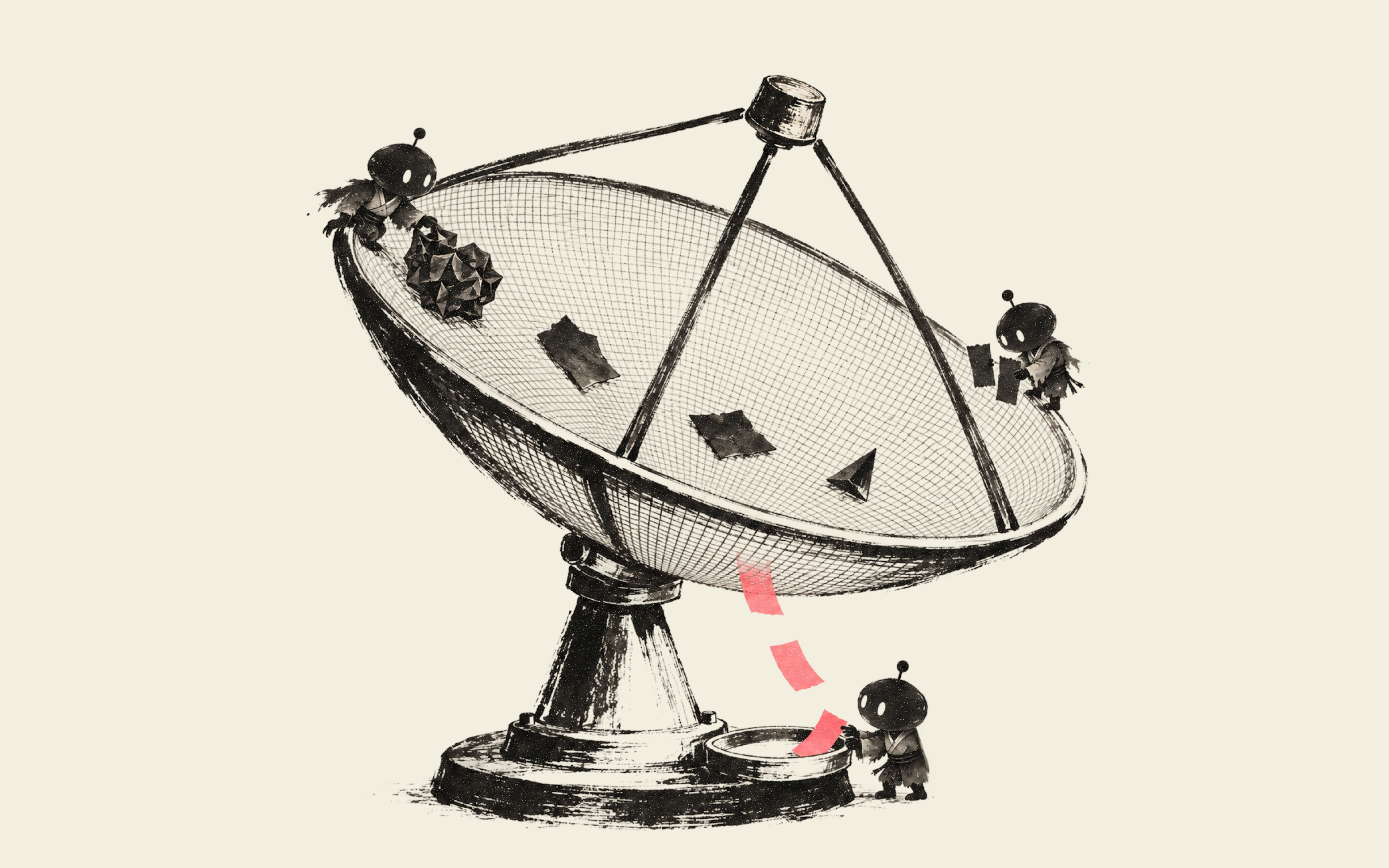

This November has given us plenty of reasons to ask one question: is this real?
n security, that question used to have a fairly reliable answer. Attacks carried mistakes that gave them away, and normal activity looked normal. That's no longer true. Attacks now arrive polished and well timed, and everyday business keeps producing activity that looks like an attack. When the two look alike, it’s much harder to make the right call.
This week gave a clear example. On November 12, Microsoft 365 had a service disruption. Two days later, Microsoft Threat Intelligence reported a phishing campaign built around it. The emails posed as service health notices, cited the real Exchange Online incident number and used each target's own organization name as the sender. They claimed mail had been held during the outage and would be deleted within 24 hours unless recipients clicked to restore it. Every detail checked out, because the attackers relied on real facts.
On November 13, the FAA grounded every departing flight in the US for more than four hours after a communications failure hit its air traffic control centers. The explanation came later: aging equipment that became overloaded. Until then, from the outside, a failure and an attack looked exactly alike.
Those two days capped a month of incidents that started out just as unclear: fridges failing at hundreds of European supermarkets, a "potential security issue" at Binance that turned out to be a $6.3 billion hack, and blood bank freezers in France suddenly set to extreme temperatures. In the first hours, it wasn't clear which were failures and which were attacks.
Squeezed from both sides
For years, security awareness training taught people to look for mistakes: an odd sender, a clumsy sentence, a link that didn't match. Those clues are disappearing. We've entered the era of the perfect lure: a message built entirely from real facts, sent at exactly the right moment, with nothing in it for a person to catch.
The Microsoft campaign was a perfect lure. A careful employee who looked up the incident number would have found it was real.
I expect to see much more of this. Strong frontier models can now follow the news, research targets and write a tailored lure for each recipient within hours of an event. Each improvement makes perfect lures faster to produce, cheaper to run and easier to aim at whatever is happening that week.
Add a complex, AI-native business environment, and the result is a flood of false alarms. A vendor emails from a new domain. A new AI tool starts reading data it never touched before. All of it is legitimate, yet plenty of it looks suspicious.
So security teams are squeezed from both sides. False positives fill the day, and the alert that matters arrives looking just like the hundred harmless ones before it.
Being wrong in either direction is expensive. Call it an attack when it isn't, and you make your own outage longer: the fix gets delayed, and legal and disclosure processes begin, all for a threat that never existed. Worse, you cause panic and undermine the trust you worked hard to build. Call it a failure when it's an attack, and the attacker stays in. Recovery wipes the evidence, and you fix the symptom while the cause stays put.
Accuracy is the measure that counts
Every incident starts with a judgment call. For CIOs and CISOs, VUCA (volatility, uncertainty, complexity and ambiguity) isn't just a management-book acronym anymore. It describes a normal week.
The natural reaction is to add more detections and push for faster response. I understand the instinct, but I think it makes the problem worse. Every new rule also fires on legitimate activity that happens to look unusual, so the team gets more alerts, and the perfect lure still slips through because it looks normal. A faster answer only helps if it's right.
So how do you make the right call quickly, when you don't have the full picture?
The first problem is time. The FAA couldn't wait for a root cause before grounding flights. Teams hit by the Microsoft lure couldn't wait to learn whether credentials had been stolen before pulling the emails from their inboxes. Attackers using AI can move from a first foothold to real damage in minutes, and no team has enough people to review every alert at that speed. To act in time, companies have to let AI act on their behalf.
Letting AI act is easy. Trusting it to take the right action, in your environment, without breaking something the business depends on, is the hard part. An agent that acts fast on a wrong call only spreads the damage faster.
That trust starts with context. An agent needs to know what's normal for this user and this system, who owns it, what depends on it and how similar cases turned out before. With that context, a vendor's new domain and a perfect lure stop looking alike. Without it, an agent is just guessing faster.
Context tells an agent what's likely true. It still has to decide whether to act before the full picture is in. That's what CPR is for: our framework for deciding when an agent may act on its own. It weighs the cost of acting against the cost of waiting. Before an agent acts, it checks three things. Confidence looks at how sure it is, measured against its real track record on similar cases. Precision looks at how narrow the action is, such as revoking one user's session while the account stays open. Reversibility asks whether the step can be undone in minutes.
When all three line up, the agent can act right away, because the risk to the business stays low even if the call later proves wrong. In the Microsoft case, that could mean pulling the email from every inbox, blocking the sender domains and revoking the sessions of anyone who clicked, all of which can be rolled back quickly. Bigger moves wait for more evidence or a human decision. Every call that holds up earns the agent more room to act the next time.
November won't be the last month like this. The next outage, breach or perfect lure is already on its way, and each one will raise the same question: is this real? Keeping it real means answering it correctly, and in time. That means spotting the attack hiding behind a real incident number, and recognizing the failure that only looks like an attack. The companies that can do that will come through the next wave of chaos with their business intact and their defenses stronger.