



- False positives overwhelm SOC teams. Analysts lose significant time investigating alerts that do not require action.
- Traditional SOC tools lack investigation context. SIEMs and SOARs process alerts but were not built to investigate them with organizational understanding.
- Operational context improves investigation accuracy. Effective AI-driven investigations depend on asset ownership, business processes, and analyst workflows.
- Mate Security uses a Security Context Graph. The platform connects SOPs, dependencies, and past investigations to power contextual triage and response.
Walk into any enterprise SOC today, and you'll find roughly the same setup. A SIEM at the center, an EDR feeding it endpoint data, a SOAR running playbooks, and a queue of alerts no one has time to investigate properly. The stack works, technically, but ask the analysts staring at it whether they trust what is making it through to them, and the answer is rarely yes.
Most SOC teams are no longer limited by telemetry collection. They are struggling to decide what deserves human attention. The 2025 SANS Detection and Response Survey found that 73% of organizations now name false positives as their top detection challenge, and analysis from The Hacker News shows analysts lose up to 30% of their time chasing them. Vendors have responded aggressively. "AI-powered" now means radically different things depending on who you ask, and decisions that once came down to ingest cost now hinge on how well the platform understands the environment it protects.
Why AI-Native SOC Tools Are Replacing Traditional Approaches in 2026
For most of the past decade, the answer to a noisy SOC was more tooling, but teams have stopped asking how to process more alerts faster and started asking why their tools cannot tell them which alerts matter in the first place.
- The Alert Volume Problem Traditional SOC Tools Cannot Solve: Even after applying automation, the volume of alerts reaching each analyst still exceeds what one person can realistically investigate in a single day. SIEMs aggregate, SOARs orchestrate, and EDRs signal endpoint events. Adding more dashboards on top of that gap does not close it.
- The Hidden Cost of Manual Triage and Analyst Burnout: The visible cost is analyst hours consumed by alerts that turn out to be non-threats. The hidden cost is the alert fatigue that builds underneath it, dulling the judgment analysts rely on when a real incident finally surfaces in the queue.
- Why Operational Context Determines Investigation Quality: An AI agent that closes alerts in 30 seconds without understanding the environment is simply generating bad conclusions faster. What separates trustworthy verdicts from unreliable ones is operational context, including who owns the affected asset, what business process it supports, and what an analyst would actually do if they had time to investigate properly.
- What Separates an AI SOC Platform From Automation Bolted on a SIEM: Automation bolted onto a SIEM assumes security is deterministic, so it follows static playbooks until the environment changes and the workflow breaks. An AI-native SOC platform investigates and adapts, grounding each verdict in the organizational context rather than in a rule written 18 months earlier.
Types of SOC Tools
Modern SOC teams rarely rely on a single platform. Most environments combine multiple categories of tools, each responsible for a different part of detection, investigation, response, or telemetry management.
8 Best SOC Tools for Enterprise Security Teams in 2026
The eight tools below cover the spectrum of modern SOC platforms, from AI-native investigation agents to mature SIEM incumbents now pivoting toward agentic AI.
1. Mate Security
Mate Security is an agentic SOC platform built around the Security Context Graph, a continuously evolving model of how an organization actually operates, including its SOPs, ownership relationships, operational dependencies, and past investigation decisions. The platform runs detection, triage, investigation, and response as one continuous cycle, with each alert feeding new reasoning back into the graph.
Standout Capabilities: The graph builds within 24 hours and grounds investigations in the operational environment rather than relying on generic baseline assumptions. Supervised response executes actions in line with internal procedures while keeping analysts in control of high-impact decisions. Enterprise customers include Bridgewater Associates, Lead Bank, AlphaSense, and Merlin Entertainments, with Mate's published dashboard metrics showing one deployment reducing MTTR by 93% over 5 months.
Where It Excels: Enterprise SOCs dealing with high alert volumes and analyst fatigue, where the depth of each verdict and the reasoning behind it matter more than adding additional rules to an already noisy detection stack.
2. Microsoft Sentinel
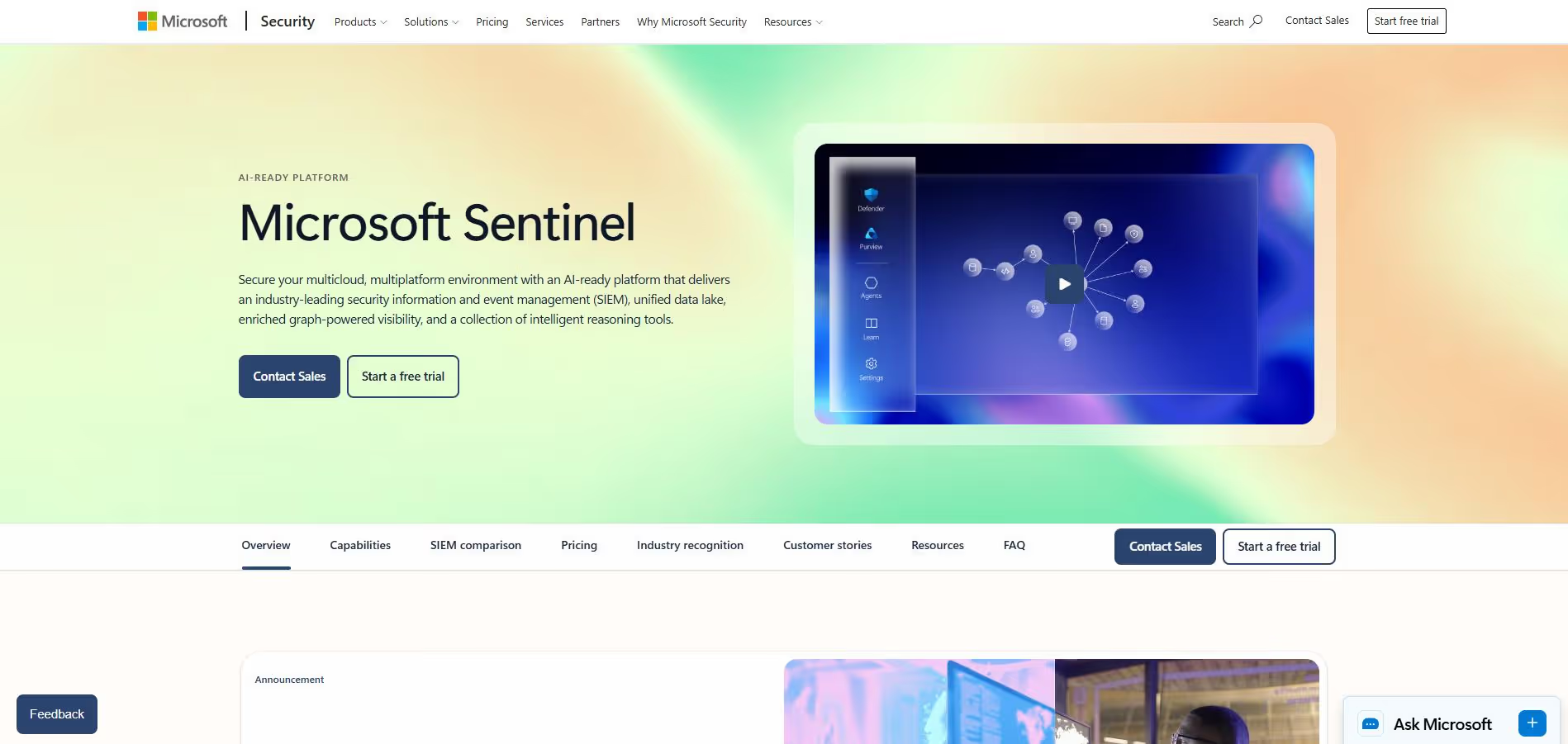
Microsoft Sentinel has evolved from a cloud-native SIEM into a broader security operations platform, combining a unified data lake, unified investigation visibility, SOAR, UEBA, and threat intelligence under the Microsoft Defender portal. Security Copilot is embedded for natural-language investigation workflows, and a hosted Model Context Protocol server brings agent-ready tooling into the platform.
Standout Capabilities: A library of more than 350 native data connectors provides broad coverage across multicloud and multiplatform environments, while the AI-assisted SIEM migration experience converts both Splunk and QRadar detections into native Sentinel rules with reduced manual effort. Free migration support is also available through Microsoft's Cloud Accelerate Factory program.
Where It Excels: Microsoft-first environments standardized on Defender XDR, Entra, and Purview, where native integrations across identity, endpoint, and cloud telemetry are deepest.
3. Splunk Enterprise Security
Now part of Cisco, Splunk Enterprise Security has repositioned itself as a unified threat detection, investigation, and response (TDIR) platform available in Essentials and Premier editions. Mission Control consolidates analyst workflows, while Splunk AI Assistant in Security and a growing set of agentic AI capabilities extend the platform further into AI-assisted SOC operations.
Standout Capabilities: Risk-Based Alerting reduces alert noise by aggregating related events into prioritized incidents rather than triggering on every signal independently, while Cisco Talos threat intelligence is integrated directly into investigation workflows. IDC research cited by Splunk reports a 304% ROI and 64% faster threat identification for organizations running the unified TDIR platform.
Where It Excels: Large enterprises with mature SOC teams and deep Splunk expertise, where advanced correlation logic, customization, and the ability to process very large telemetry volumes remain core operational requirements.
4. CrowdStrike Falcon
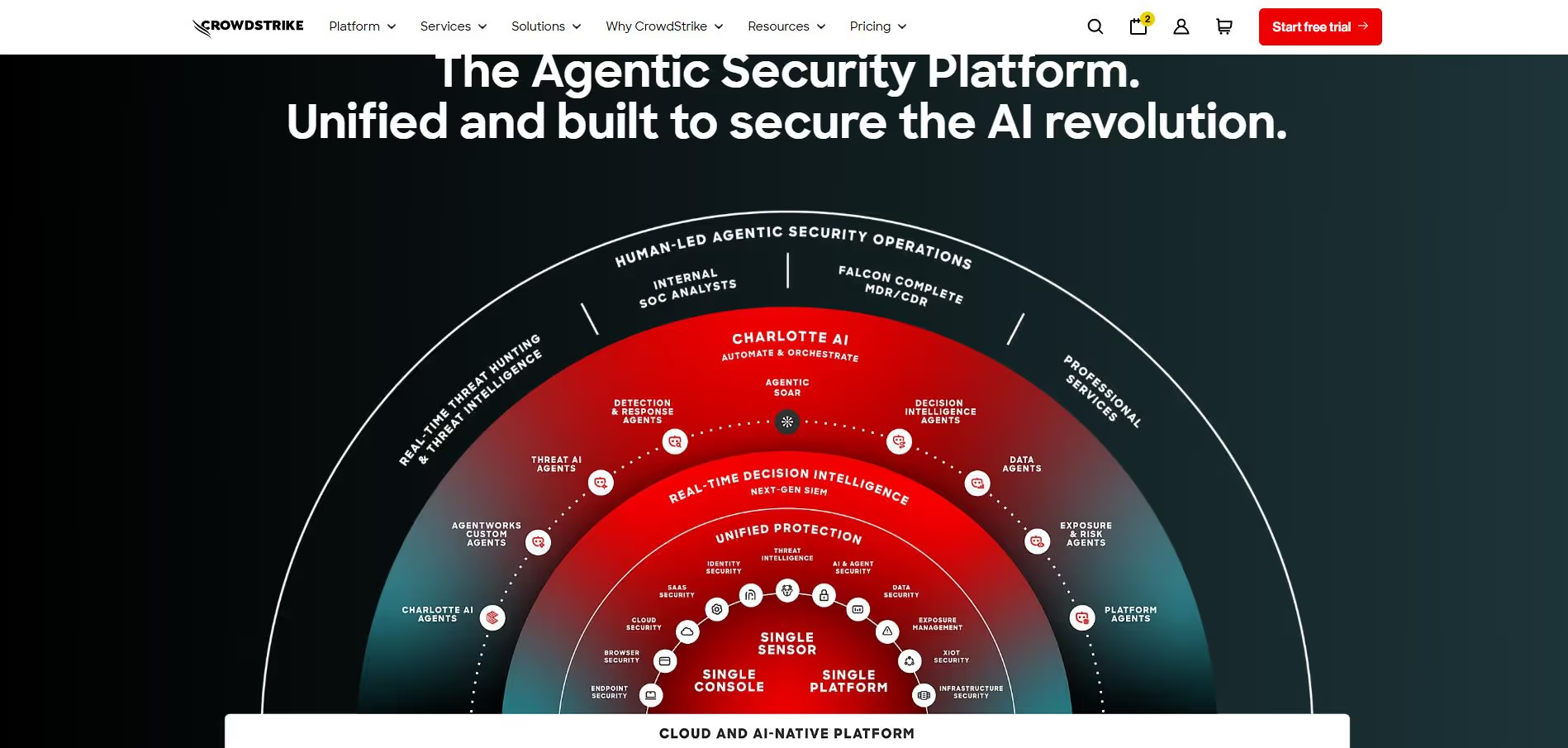
CrowdStrike Falcon is an AI native security operations platform that combines endpoint security, XDR, threat intelligence, identity protection, cloud security, SOAR, and Next Gen SIEM capabilities on top of the Falcon platform and the LogScale index-free data architecture. Charlotte AI and Charlotte Agentic SOAR extend the platform with AI-assisted investigation, workflow automation, and no-code agent orchestration for modern SOC operations.
Standout Capabilities: Native ingestion of Microsoft Defender for Endpoint telemetry, federated search across distributed data stores, and the Query Translation Agent that converts Splunk searches into CrowdStrike Query Language reduce friction for organizations migrating from legacy SIEM environments. Falcon Fusion SOAR and Charlotte AI help analysts automate investigations and response workflows across endpoint, identity, and cloud telemetry.
Where It Excels: Organizations already standardized on CrowdStrike, where tight integration across endpoint, identity, cloud, and threat intelligence workflows can streamline SOC operations and reduce investigation complexity.
5. Palo Alto Networks Cortex XSIAM

Cortex XSIAM is Palo Alto Networks' consolidated security operations platform, bringing together SIEM, SOAR, endpoint, network, and cloud detection workflows on the Cortex Extended Data Lake. Cortex AgentiX layers agentic AI capabilities onto the platform, extending the automation foundation originally established by Cortex XSOAR with prebuilt agents for threat intelligence, email investigation, endpoint forensics, and network response.
Standout Capabilities: AgentiX is built on insights from more than 1.2 billion real-world playbook executions and includes over 1,000 prebuilt integrations alongside native Model Context Protocol support. Palo Alto Networks reports up to 98% MTTR reduction and 75% less manual work in customer environments based on internal benchmarks.
Where It Excels: Enterprises pursuing platform consolidation, particularly Palo Alto Networks customers looking to unify SOC, endpoint, network, and cloud telemetry within a single ecosystem.
6. ServiceNow Security Operations
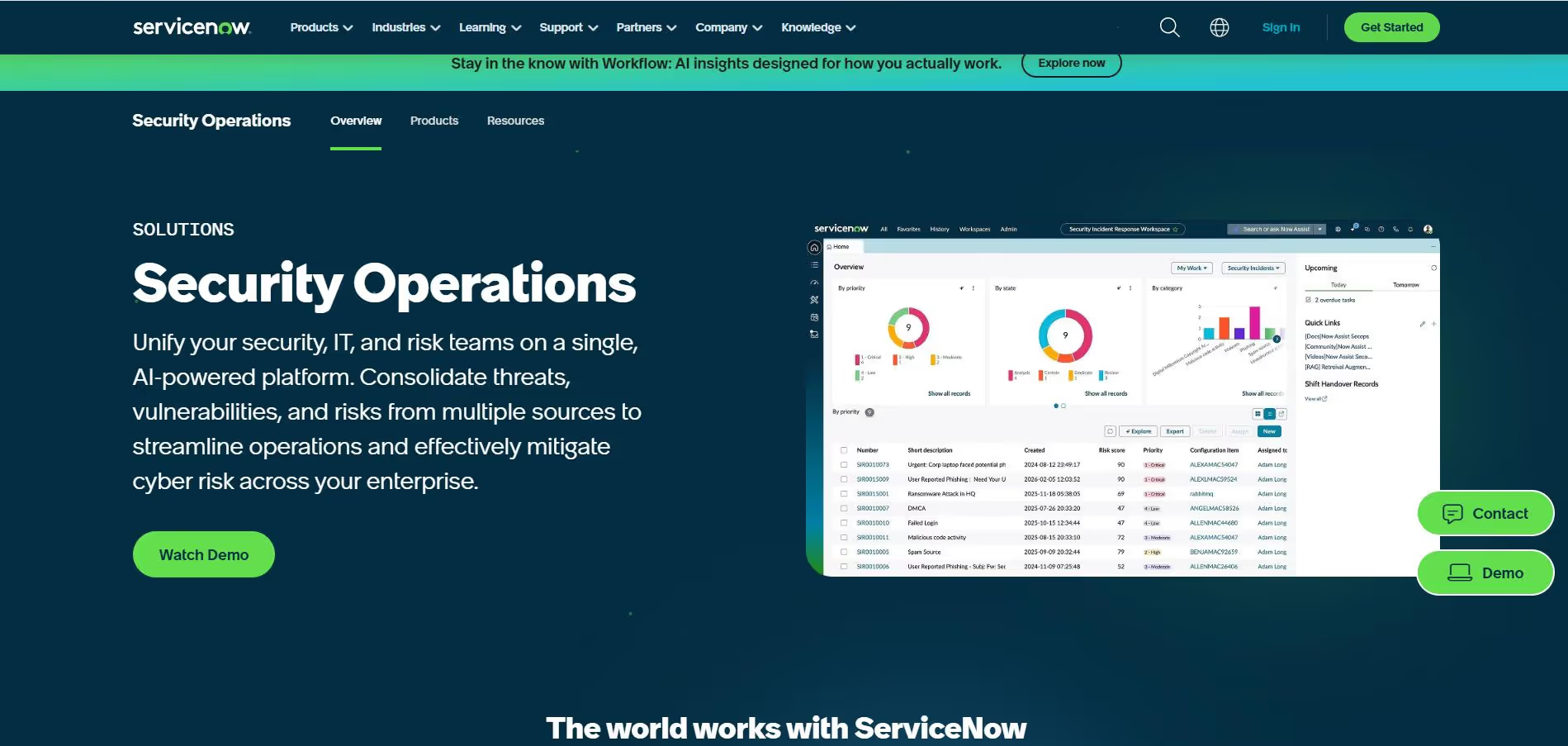
ServiceNow Security Operations is a workflow-driven security operations and SOAR platform built on the Now Platform, unifying Security Incident Response, Vulnerability Response, and Threat Intelligence on top of ServiceNow’s broader ITSM and CMDB foundation. Now Assist adds agentic AI capabilities for incident summarization, resolution planning using runbooks, knowledge articles, and past similar incidents, plus shift handover reporting in natural language.
Standout Capabilities: Native CMDB integration grounds incidents in asset, user, and service context, while the Microsoft Security Copilot integration enables bidirectional AI-to-AI collaboration between ServiceNow SIR and Microsoft security data. AI Control Tower extends governance across AI agents, models, and identities with audit logs, adoption metrics, runtime monitoring, risk controls, and value tracking.
Where It Excels: Enterprises already standardized on ServiceNow for IT and business workflows, where consolidating security incident response into the same system of record can reduce handoffs across SOC, IT, and compliance teams.
7. Wiz
Wiz has expanded from a cloud security posture management platform into a broader CNAPP and cloud detection ecosystem, combining DSPM, vulnerability management, attack path analysis, and cloud runtime detection inside a unified graph-based architecture. Wiz Defend extends the platform into cloud native detection and response workflows with AI-assisted investigation, threat correlation, and multicloud visibility.
Standout Capabilities: The Wiz Security Graph correlates identities, workloads, secrets, vulnerabilities, network exposure, and toxic combinations into unified attack paths that prioritize real business risk instead of isolated findings. Native integrations across AWS, Azure, Google Cloud, Kubernetes, and developer tooling give security teams broad visibility with minimal operational overhead.
Where It Excels: Cloud native enterprises operating large multicloud environments, especially organizations prioritizing exposure management, lateral movement analysis, and cloud attack path visibility alongside traditional SOC investigations.
8. Microsoft Defender XDR
Microsoft Defender XDR is Microsoft's integrated extended detection and response platform, unifying endpoint, identity, email, cloud application, and infrastructure telemetry across Defender for Endpoint, Defender for Identity, Defender for Office 365, and Defender for Cloud Apps. The platform integrates closely with Microsoft Sentinel for broader SIEM and SOAR operations, while Security Copilot adds AI-assisted investigation workflows with natural language hunting, automated summarization, guided response recommendations, and triage assistance.
Standout Capabilities: Cross-domain correlation automatically links endpoint, identity, email, and cloud signals into unified incidents, while deep integration with Entra, Purview, and the broader Microsoft security ecosystem gives analysts strong contextual visibility across enterprise environments. Exposure management, attack disruption, and built-in automation help reduce manual investigation overhead in large-scale SOC operations.
Where It Excels: Microsoft-centric enterprises looking for tightly integrated XDR and SOC operations across endpoint, identity, SaaS, and cloud infrastructure without relying heavily on disconnected third-party tooling.
SOC Tools Comparison Overview
The table below compares how each platform approaches modern SOC operations, AI-driven investigation, and deployment architecture.
Key Features to Look for in SOC Tools
The features below separate modern SOC platforms from automation layered onto legacy SIEM workflows and reflect the criteria enterprise buyers increasingly prioritize during SOC evaluations.
- Full Alert Coverage Without Analyst Bottlenecks: A modern SOC platform should apply automated investigation to every alert, including informational ones, rather than relying on analysts to manually decide which alerts deserve attention.
- Investigation Context That Reflects How the Organization Actually Operates: Generic playbooks produce generic verdicts. The platform should ground investigations in operational context, including asset ownership, business process dependencies, and applicable organizational policies.
- Contextual Triage That Closes False Positives Before They Reach Analysts: False positives should be resolved inside the investigation layer with traceable reasoning, not suppressed by static rules that break the moment the environment changes.
- Supervised Response With Human Approval on High Impact Actions: Autonomous response for low-risk actions may be acceptable, but high-impact actions such as account disablement, host isolation, or credential rotation should still require analyst approval.
- Institutional Knowledge Capture That Persists Across Analyst Turnover: The platform should retain what senior analysts learn about benign alerts, custom application behavior, and historical investigation outcomes so analyst turnover does not reset operational knowledge inside the SOC.
- Rapid Onboarding Without Months of Manual Tuning: Time to value should be measured in days, not quarters. Platforms requiring extensive playbook authoring or environment-specific tuning delay outcomes and limit scalability across business units.
- Integration Across SIEM, EDR, Identity, CSPM, and Ticketing Systems: A modern SOC platform should integrate cleanly with the existing security stack rather than forcing rip-and-replace migrations. Telemetry should extend beyond SIEM and EDR into identity systems, cloud posture management, and ticketing workflows.
How to Choose the Right SOC Tool for Your Security Team
Beyond feature comparisons, the right SOC tool is the one that fits the operational reality of the team running it, including alert volume, analyst maturity, and existing stack commitments.
- Assess Your Current Alert-to-Investigation Conversion Rate: Establish a baseline for how many alerts your SOC receives daily versus how many actually get investigated end-to-end. The gap reveals where automated investigation can have the greatest operational impact. IBM's 2025 Cost of a Data Breach Report still places the average identification and containment timeline at 241 days.
- Evaluate How Quickly the Tool Becomes Investigation-Ready: Ask vendors to demonstrate time-to-value with production-grade workflows, not controlled demos. Investigation-ready means the platform produces reliable verdicts in production environments, not simply that connectors have been enabled.
- Look for Platforms That Preserve and Build on Analyst Expertise Over Time: The platform should capture how senior analysts handle alerts, custom applications, and operational edge cases so institutional knowledge compounds inside the SOC instead of leaving with analyst turnover.
- Prioritize Tools That Integrate With Your Existing Stack Without Rip-and-Replace: Platforms requiring full SIEM or EDR replacement introduce operational risk and delay outcomes. Native ingestion from existing SIEM, EDR, identity, and email security tooling should now be considered baseline functionality.
- Consider How the Tool Scales as Alert Volume Grows Without Adding Headcount: Evaluate how the platform performs at two or three times the organization's current alert volume. The right tool keeps analysts focused on higher-confidence investigative decisions as telemetry volume expands.
- Evaluate the Human-in-the-Loop Model and Analyst Control Over Autonomous Actions: High-impact actions, including account disablement, host isolation, and credential rotation, should continue to require analyst approval rather than executing autonomously.
Conclusion
The teams winning in 2026 will not be the ones running the most tools, but the ones running platforms that actually understand the environments they protect. That is the line separating SOC tools that still depend on analysts to assemble context manually from platforms designed to investigate with organizational context already built in.
Across the market, that shift is pushing vendors toward AI-native investigation workflows, supervised response models, and deeper integration across identity, cloud, endpoint, and operational telemetry. Mate Security is a major example of how quickly the category is evolving, particularly around contextual investigation, rapid onboarding, and reducing analyst-driven triage without removing human oversight from high-impact decisions.
For enterprise SOC teams already overwhelmed by alert volume and analyst fatigue, the long-term differentiator will not be how many alerts a platform generates. It will be how effectively the platform helps analysts investigate, prioritize, and respond at scale without continuously expanding headcount.
FAQs
Traditional SOC tools collect and correlate telemetry effectively, but they still rely heavily on analysts to manually determine which alerts deserve investigation.
- Aggregate alerts from SIEM, EDR, identity, and cloud tooling into a single investigation queue.
- Apply contextual investigation logic that evaluates asset ownership, user behavior, and operational dependencies.
- Suppress low-confidence noise only after investigation reasoning validates the alert as benign.
- Route only high-confidence incidents to analysts for escalation or response approval.
SOC teams reduce burnout by automating repetitive triage work while preserving analyst oversight for high-impact investigative decisions.
- Investigate every alert automatically instead of relying on manual queue prioritization.
- Capture analyst decisions and feed them back into the investigation model as institutional knowledge.
- Reduce repetitive false-positive handling across recurring detections and known benign behaviors.
- Keep analysts focused on high-confidence threats requiring business-aware judgment.
Discover how AI is empowering SOC teams.
Fast investigation without operational context often produces inaccurate verdicts that increase analyst workload rather than reduce it.
- Map alerts to business-critical assets, application owners, and organizational workflows.
- Evaluate whether observed behavior aligns with expected operational patterns.
- Use prior investigation outcomes to improve future triage decisions automatically.
- Produce response recommendations tied directly to business impact and risk.
Learn more about Mate’s Security Context Graph.
Mate Security uses the Security Context Graph to connect telemetry, operational dependencies, and analyst knowledge into a continuous investigation workflow.
- Ingest signals from SIEM, EDR, identity, email, and cloud platforms.
- Build contextual relationships between users, assets, applications, and prior incidents.
- Investigate alerts using organization-specific reasoning instead of generic baselines.
- Recommend supervised response actions with evidence-backed explanations.
Find out why Mate Security built the Security Context Graph.
Mate Security is designed to become investigation-ready rapidly by building organizational context directly from the existing security environment.
- Connect existing telemetry and workflow systems into the Security Context Graph.
- Learn ownership structures, recurring behaviors, and investigation history automatically.
- Begin contextual investigations across all incoming alerts within days instead of months.
- Continuously improve investigation quality as analysts interact with the platform.
Book a demo to find out what Mate Security can do for your organization.