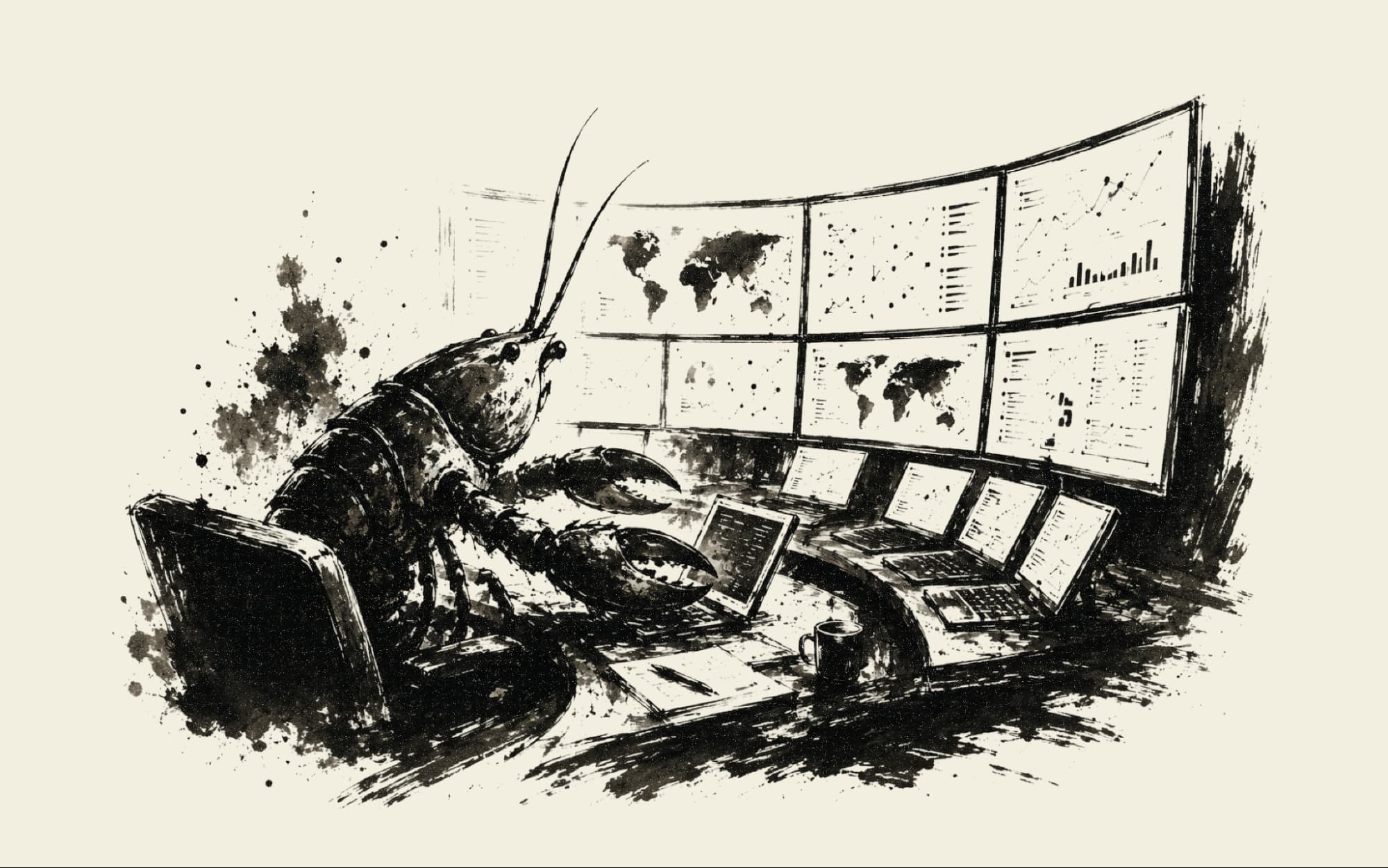

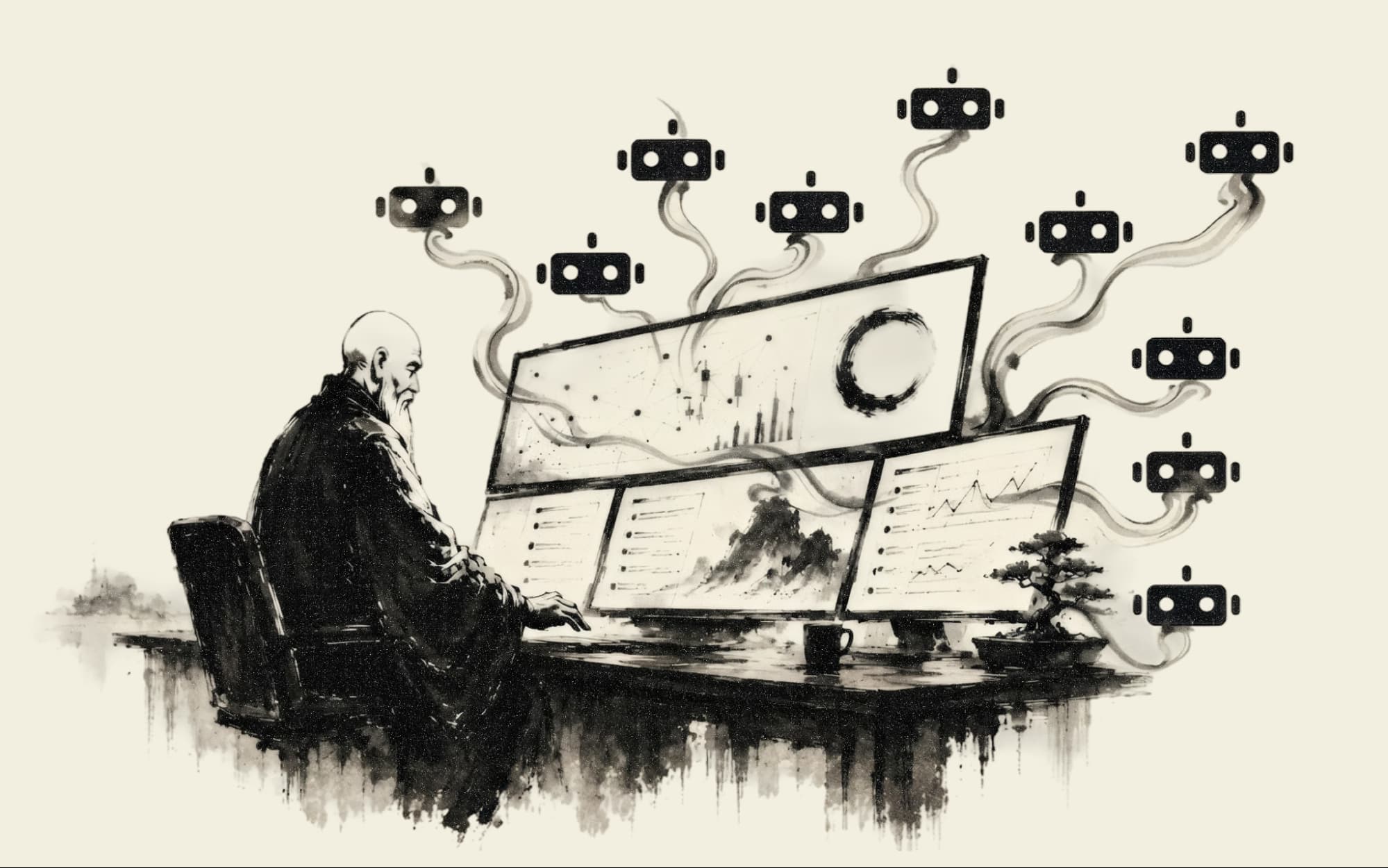

- AI SOC Agents automate security investigations. They investigate alerts, hunt threats, and support detection by reasoning across multiple data sources to produce evidence-backed verdicts.
- Growing operational demands are driving adoption. Rising alert volumes, analyst shortages, machine-speed attacks, and continuous monitoring are increasing demand for AI-driven security operations.
- Organizational context improves accuracy. Grounding investigations in organizational knowledge produces more reliable verdicts than relying on generic detection logic.
- Mate’s CD/CR framework compounds over time. Completed investigations become new detections, while each detection adds context for future investigations, improving accuracy with every alert.
What Are AI SOC Agents?
AI SOC Agents are AI-driven systems that perform core security operations work, including alert triage, investigation, threat hunting, and detection engineering support - tasks traditionally handled by human analysts and detection engineers. Unlike SOAR playbooks or static correlation rules, which execute the same fixed steps regardless of context, AI SOC Agents reason dynamically, adjusting their investigation based on what they find and reasoning across multiple data sources. A successful AI SOC Agent produces a documented, evidence-backed verdict for every alert rather than a partial enrichment that still requires manual follow-up.
The Operational Pressure Driving AI SOC Agent Adoption
Several converging pressures are pushing security teams toward AI-driven operations, and they compound rather than occur in isolation. Understanding what's actually driving adoption clarifies which AI SOC Agent capabilities matter most for a given environment.
- Alert Volumes Rising Faster Than Analyst Capacity: Security stacks generate more telemetry every year as organizations add tools, cloud services, and endpoints, while the hours available for manual review stay fixed. The gap forces teams to triage by instinct rather than investigate every alert, leaving genuine threats buried in volume.
- Security Talent Shortages and Analyst Burnout: Experienced analysts are difficult to replace, and the hours lost to repetitive manual triage accelerate burnout among the analysts SOCs already have. When burned-out analysts leave, the institutional knowledge they carried leaves with them, and rebuilding it consumes months of the remaining team's time.
- Machine-Speed Attacks Demanding Machine-Speed Investigation: Attackers increasingly use automation to move through environments faster than manual, human-paced investigation can keep up with. A triage process built around hours-long human review cycles cannot contain threats that complete their objective in minutes.
- Continuous Monitoring Requirements Across Distributed Environments: Cloud infrastructure, SaaS applications, and remote endpoints have eliminated the fixed perimeter that traditional SOC monitoring assumed. Coverage now has to extend continuously across environments that never stop generating signal, which consumes far more analyst hours than shift-based monitoring was ever designed to sustain.
Types of AI SOC Agents
AI SOC Agents are typically built around a specific function within security operations rather than as a single general-purpose tool. The table below breaks down the primary agent types by what they do and the output they produce.
Core Functions AI SOC Agents Must Perform
Every AI SOC Agent needs to perform a core set of functions to deliver real operational value. These four represent the minimum bar for reducing analyst workload rather than adding another tool to the stack.
- Alert Triage and Prioritization at Scale: The agent must ingest alerts from across the security stack and rank them by confidence and business impact, so analysts see the alerts that matter first instead of working through a queue in arrival order.
- Contextual Investigation and Evidence Collection: Once an alert is prioritized, the agent runs an automated, contextual investigation, gathering evidence across SIEM, EDR, identity, and cloud sources to build a complete picture rather than a partial enrichment.
- Behavioral Threat Detection and Anomaly Analysis: The agent needs to recognize deviations from established behavioral baselines, keeping analysts focused on decisions that demand human judgment rather than sorting through every anomaly by hand.
- Supervised Response With Human Oversight: When an investigation concludes, the agent should support supervised response, executing or recommending action while keeping a human in the loop for decisions with meaningful impact. Traditional autonomous agents are hard to trust here precisely because they lack this alignment. Without guardrails enforced outside the agent's own reasoning, there's no reliable boundary between what it can decide and what it can act on.
Top Use Cases for AI SOC Agents
AI SOC Agents apply their core functions across a range of everyday security scenarios. The table below outlines the top use cases and what the agent typically does in each.
Why Context Is the Differentiator Most AI SOC Agents Get Wrong
Most AI SOC Agents on the market approach investigation the same way regardless of which organization they're deployed in. That approach breaks down in practice, and the reason comes down to how each platform treats context.
- Agents That Rebuild Context Per Incident Cannot Scale: An agent that starts from scratch on every alert, pulling asset data and history fresh each time, spends cycles reconstructing what it should already know. This adds latency to every investigation and means the agent never gets faster or sharper as alert volume grows.
- Generic Detection Logic Produces Generic (and Wrong) Verdicts: Detection logic built on industry-wide patterns rather than an organization's actual environment cannot distinguish a genuine anomaly from normal behavior specific to that business. The result is verdicts that look reasonable in the abstract but misread what's actually happening on the ground.
- Institutional Knowledge Is the Foundation, Not an Add-On: Grounding every investigation in organizational context, including asset criticality, past incidents, and known exceptions, has to be the starting point of an investigation, not a layer applied after the fact. Platforms that treat context as optional enrichment rather than the foundation end up with investigations that are technically thorough but practically unreliable.
CD/CR: The Closed-Loop Framework That Makes AI SOC Agents Compound
CD/CR (Continuous Detection, Continuous Response) is Mate's closed-loop framework where investigations and detections continuously feed each other. Each cycle strengthens the next instead of starting over.
How Investigations Compress Into Detections
When an automated, contextual investigation confirms a real pattern, that finding doesn't stay locked in a single case file. The platform compresses the investigation's evidence and reasoning into detection logic that can catch the same pattern automatically the next time it appears, closing the gap between "we found this once" and "we now catch this every time."
How Detections Feed the Next Investigation
New detections built from prior investigations don't operate in isolation either. Each one adds a data point to the platform's understanding of the organization's environment, so the next investigation touching related assets or behavior starts with more context than the one before it, rather than starting from zero.
Why the Loop Gets Smarter With Every Alert
Because investigations inform detections and detections inform future investigations, the platform's accuracy compounds with volume instead of staying flat. The more alerts that move through the loop, the more institutional knowledge the platform accumulates, which is what allows CD/CR to improve over time rather than requiring manual tuning to keep pace with a changing environment.
Key Criteria for Evaluating AI SOC Agent Platforms
Vendor claims are easy to make and hard to verify in a demo. These 5 criteria separate platforms that hold up in production from those that don't.
- Accuracy of Investigation Verdicts Against Analyst Outcomes: Ask how the platform's verdicts compare to what an experienced analyst would conclude on the same alert, and how that accuracy - often tracked as an Agreement Rate - is measured over time. Volume metrics mean little if a portion of verdicts require analysts to redo the investigation anyway.
- Time to Value From Integration to First Useful Result: A platform that takes months of manual training and tuning before it delivers a usable result defeats the purpose of adopting it. Evaluate how quickly the platform moves from initial integration to investigation-ready output.
- Human-in-the-Loop Controls for High-Impact Response Actions: The platform should support supervised response, with clear boundaries on what it can act on autonomously versus what requires analyst approval. Ask specifically how those boundaries are enforced for high-impact actions like account disablement or network isolation.
- Integration Depth Across the Full Security Stack: A logo wall of integrations doesn't confirm depth. Ask whether the platform investigates natively across SIEM, EDR, identity, and cloud sources, or whether it requires data centralization before it can act.
- Data Ownership and Independence From Vendor Lock-In: Ask whether you own the underlying data and context the platform builds, or whether it stays locked inside the vendor's system. Find out whether evolving and extending the platform's logic requires the vendor's services every time, or whether you have the tools to do it independently.
Best Practices for Deploying AI SOC Agents
Choosing the right platform is only half the equation. How it's deployed determines whether it actually reduces analyst workload or just adds a new layer to manage.
- Keep Human Analysts in the Decision Loop: Full autonomy on every action removes the judgment calls that experienced analysts are best positioned to make, particularly on ambiguous or high-impact cases.
- Define Clear Boundaries Between Automated and Human Decisions: Without explicit boundaries, teams either over-restrict the platform and lose its value or under-restrict it and take on risk they didn't intend to accept. These boundaries only hold if they're enforced by the platform itself, not by the agent's own judgment. That means permission limits, blast-radius limits, and confidence thresholds must sit outside the agent's reasoning loop, preventing the agent from quietly widening its own authority.
- Continuously Validate Agent Accuracy Against Analyst Outcomes: Accuracy at deployment doesn't guarantee accuracy six months later as the environment changes. Ongoing validation catches drift before it erodes trust in the platform.
- Ground Every Agent in Organizational Context, Not Generic Rules: An agent reasoning from generic industry patterns instead of the organization's actual assets, history, and exceptions will produce verdicts that look plausible but miss what's actually happening.
How Mate Runs Continuous Investigation Across the Entire Alert Queue
Mate is built to close the gap between what AI SOC Agents should do and what most platforms actually deliver in production.
- Security Context Graph Built Within a Few Hours of Integration: When Mate integrates, it builds a Security Context Graph within a few hours, structuring SOPs, ownership records, architecture, and investigation history into a living knowledge source the platform's agents draw on for every case.
- Context-Led Investigations Against Your Organizational Reality: Rather than reasoning from generic industry patterns, the platform investigates every alert against your actual environment, an approach the team has written about at length when breaking down how to tell genuine context from vendors who use the word loosely.
- False Positives Closed Through Investigation, Not Rule Suppression: Instead of tuning detection rules to quiet recurring noise, the platform investigates each alert on its merits and closes false positives with documented reasoning, so suppression never hides a real threat that happens to resemble a known benign pattern.
- CD/CR: Closed-Loop Framework Where Investigations Build Better Detections: Mate's CD/CR framework compresses confirmed investigation findings directly into detection logic, closing the loop between what the platform learns and what it catches automatically next time.
- Detection Building From Closed Investigations: Every closed investigation becomes raw material for the next detection, and the platform's own team has detailed why this matters at machine-speed alert volumes where manual detection engineering can't keep pace on its own.
- Gamebooks Turn Closed Investigations Into Adaptive, Guardrailed Playbooks: Unlike rigid SOAR playbooks that break the moment conditions change, Gamebooks are dynamic, editable, and built from closed investigations. Guardrails enforced outside the agent's reasoning loop - narrow permissions, reversible steps, confidence thresholds, escalation rules - keep the platform from widening its own authority, hiding its own actions, or grading its own accuracy.
- Supervised Response With Human Approval on High-Impact Actions: The platform executes or recommends response actions aligned with your organization's SOPs, keeping a human in the loop on high-impact decisions rather than defaulting to full autonomy across the board.
- Meets Analysts Where They Are, Not Where the Tool Wants Them to Be: Mate works alongside familiar analyst tools rather than requiring teams to abandon their existing investigation console, reducing adoption friction and preserving analyst workflow preference.
In one deployment, this approach delivered a 93% reduction in MTTR over five months, based on published dashboard metrics.
Conclusion
The AI SOC Agent market is crowded with platforms claiming autonomy, but autonomy without organizational context produces verdicts that look confident and miss what's actually happening. Alert volumes and machine-speed attacks have made that gap impossible to ignore. The platforms worth deploying are the ones that treat institutional knowledge as the foundation of every investigation, not an add-on layered in after the fact.
Mate builds that foundation first. A Security Context Graph within 24 hours, automated, contextual investigations against your real environment, and a CD/CR loop that compounds accuracy with every alert. For security leaders evaluating this space, the real test isn't how fast a platform claims to move. The real test is if it actually knows the organization it's defending.
FAQs
AI SOC Agents reduce alert fatigue by investigating every alert to produce an evidence-backed verdict instead of suppressing noisy detections.
- Connect your SIEM, EDR, identity, and cloud telemetry.
- Let the agent investigate each alert using organizational context rather than severity alone.
- Review documented verdicts instead of manually triaging raw alerts.
- Feed confirmed outcomes back into future investigations to improve accuracy.
Find out how to make false positives an asset.
AI SOC Agents dynamically plan investigations based on evidence, while SOAR executes predefined workflows regardless of changing context.
- Identify repetitive investigations that still require analyst reasoning.
- Automate evidence collection instead of only automating response actions.
- Keep analysts approving high-impact decisions while AI performs investigative work.
Discover the limitations of autonomous SOCs.
Organizational context enables AI SOC Agents to investigate alerts against your assets, history, ownership, and business environment instead of relying on generic detection logic.
- Build a centralized security knowledge source.
- Include asset criticality, SOPs, ownership, and historical investigations.
- Ground every investigation in this context before reaching a verdict.
Learn more about Mate’s security context graph.
Mate transforms organizational knowledge into a Security Context Graph, investigates alerts against that context, and produces documented investigation outcomes that improve future detections.
- Integrate your security tools with Mate.
- Allow Mate to build its Security Context Graph.
- Review evidence-backed investigations.
- Convert confirmed findings into stronger future detections through the CD/CR workflow.
Learn more about Mate’s AI SOC platform.

.png)